Specialist Task Force 333:
European Accessibility Requirements for Public Procurement of
Products and Services in the ICT Domain
(EC Standardization Mandate M 376, Phase 1)
For an accessible version (providing the same content to
an accessibility level of W3C WAI WCAG1.0 AA(A)), click here
!
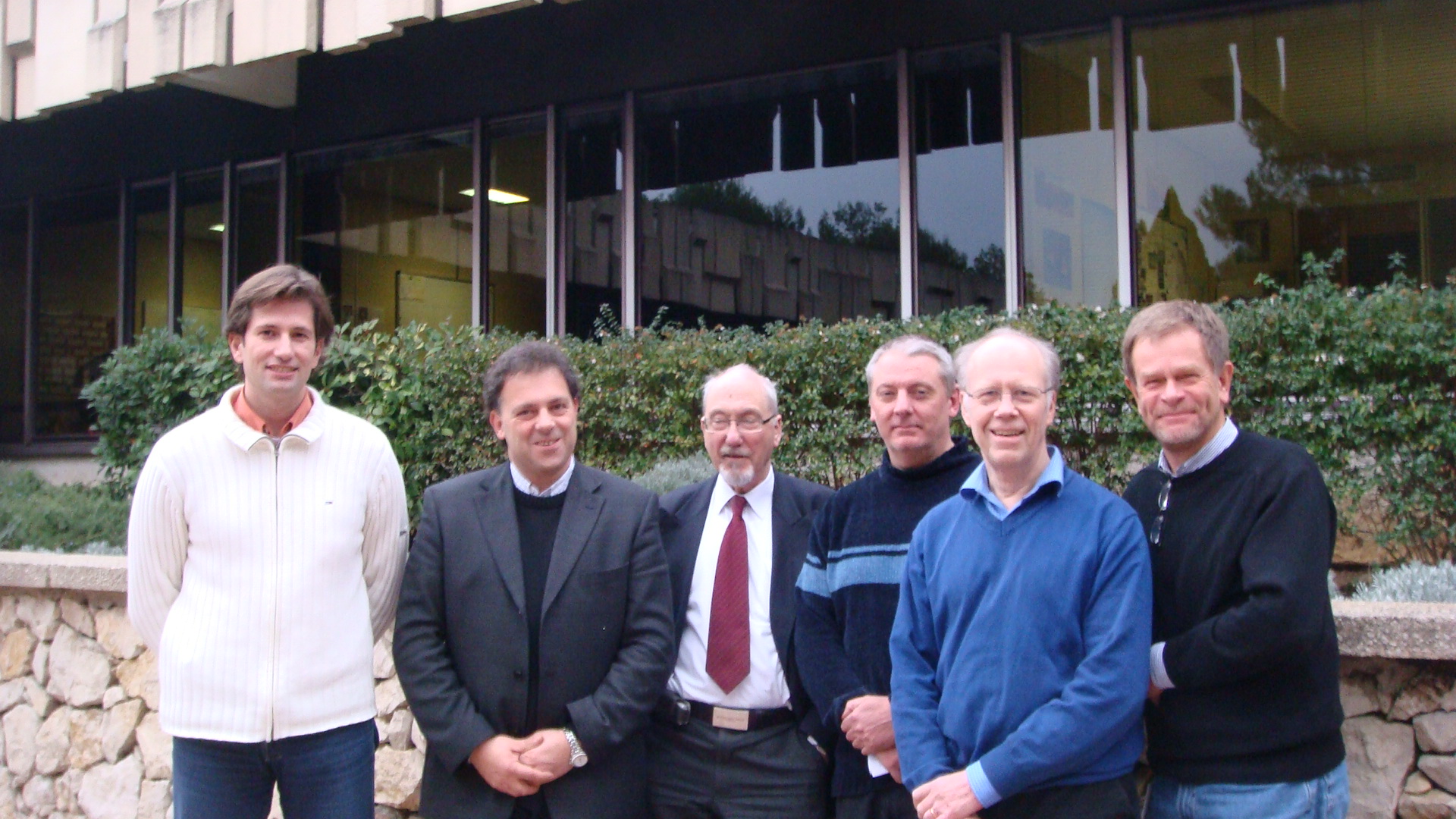
Who we are:
Team Members: Nikos Floratos
Bruno von Niman (STF Leader)
Walter Mellors
Sean Hayes
Gunnar Hellström
Richard Hodgkinson
Latest news: The ETSI Technical Report has been
published (available below, together with all public draft versions and the full
log of comments received (with team resolutions)
First public draft released on November 20, 2007 for information and
comments, due by January 10, 2008.
Second public draft, released on February 12, 2008 for information and
comments, due by March 4, 2008
Third public draft, released on March 17, 2008 for information and comments
due by April 16, 2008.
Fourth (and last) public
draft for comments, released on May
19, 2008 for information and comments due by August 11 (18h00 CET), 2008.
Final draft for ESO TB
cross-approval
(by ETSI
TC HF, CEN BT WG 185 and CENELEC BT WG101-5). The ESO
cross-approval meeting will be hosted by ETSI, in Sophia Antipolis, France on
October 8, 2008, during 14h00- 18h00.
Note:
Invited experts from DATSCG or other stakeholder organisations
who are not members of the relevant CEN/CENELEC
or ETSI Committees may attend (please send a registration request to
Bruno.vonNiman@etsi.org not later than Friday, October 3, 14h00 CET).
Please note that you will be permitted to comment on the draft deliverables but
not to vote on the documents being presented for approval.
The log of all 319 comments, input and proposals received until October 8, 2008
is available here
(also including brief STF333’s resolutions about how the comments have been
addressed).
The addressing of the 175 comments received on the 4th Public draft
is reflected by the Final draft (version 50, provided above).
All comments received during the ETSI TC Human Factors and
joint ESO cross-approval meeting on October 8, 2008 are implemented in the ESO
TB-approved (by
CEN BT WG 185, CENELEC BT WG101-5 and
ETSI TC Human Factors), version, v51, available here.
This same version has, by February 2009, been approved by
the CEN and CENELEC Technical Committee Management Groups (BTs).
The document, ETSI Technical Report TR 102 612
(available here) has been published by
ETSI, following the conclusion of the approval process.
We would like to thank all those who have followed the work,
provided appreciated guidance and contributed with their valuable time, efforts
and input to the development of the Technical Report and the successful
conclusion of the work M 376 Phase I work!
The elaboration of Phase II is under elaboration, in
coordination between the ESOs (CEN, CENELEC and ETSI).
What we do :
In response to the European Commission’s Mandate M 376, the
European Standardization Organizations (ESOs) have responded by
setting up a project and dividing the work between them
according to their respective strengths and skill sets. The
authoring of the ETSI contribution to the ESOs response to the
mandate is being carried out within the ETSI Human Factors
Technical Committee, by STF333.
The team is developing ETSI Technical Report (TR) 102 612, that
sets out the results of the ETSI part of Phase I of the M 376
work. The TR:
- Characterizes the public
procurement of ICT products and services;
- Provides a listing of
existing functional accessibility requirements:
- Identifies gaps where no
accessibility requirements exist;
- Provides a list of relevant
existing national, European and international standards and technical
specifications; and
- Gives proposals for
standardization work for the development of requirements and award criteria that
still do not exist or that are not yet standardized.
The TR
(under development) is intended to
provide
all the necessary information to fully support the standardization activities
required in Phase II of the mandated work.
The
parts relating to the assessment of suitable testing and conformity schemes
are being authored by our colleagues in CEN BT/WG185/PT, in close co-ordination
across the ESOs. The two projects
are closely coordinated.
The ETSI work and draft
TR
have been presented to the public with several occasions, e.g. at the ICTSB
DATSCG meeting
on April 16 (presentation available
here) and the Open Meeting, held during June 3-4,
2008, in Brussels (presentation available
here).
The Terms of Reference document for this work
is available here.
Why we do it:
People with disabilities and older people make up a large part of the population in the European Union.
An estimated 90 million people, or 20% of the population, belong to this group showing that accessibility
is a major issue. With the changing age structure and the fact that disability is strongly related to age,
the European Union faces a coming major challenge to maintain and improve the quality of life, independence
and integration of these citizens. ICT plays a growing and important role in the economic, educational and
social life of Europeans. Therefore, access to mainstream ICT is crucial for all, including people with
disabilities and older persons. Making this technology, and the services using it, more accessible would
facilitate the inclusion of this already disadvantaged group. It is socially, ethically, economically
and politically important that the advantages of ICT are made available to as many citizens as possible.
Although the new generation of technology provides numerous new
opportunities for people with disabilities and older persons, new
technology can also be troublesome from an accessibility point of
view. There has not been sufficient market reaction to what has been
done at a policy level to enhance accessibility. This new mandate
builds upon previous work, and deals with the development of
European accessibility requirements for public procurement of
products and services in the ICT domain.
ICT products should be designed in an accessible manner so that people with disabilities and elderly
persons can use and profit from them in the same way as everyone else. In doing so harmonization of
these requirements will not only facilitate the work of industry, it will also enlarge markets, and
provide potential buyers with better products and services. The inclusion of accessibility requirements
in public procurement will constitute an incentive for manufacturers to develop and to offer accessible
devices, applications and services, which in turn will benefit people with disabilities and older people
but also will be to the benefit of other users. To achieve this accessibility goal, it is necessary to:
-
harmonise and facilitate the public procurement of accessible ICT products
and services by identifying a set of functional European accessibility requirements for public procurement
of products and services in the ICT domain, and
- provide a mechanism through which the public procurers have access to an electronic toolkit,
enabling them to make use of these harmonized requirements in procurement processes.
EC Mandate M/376 requests that the standards organizations work to harmonize, throughout
Europe, those accessibility requirements that may be applied, regardless of the value of the
purchase to public procurement of ICT products and services and thereby to achieve interoperability.
The work performed under this Mandate could give an incentive both for the market and public organizations to take the aspect
of accessibility into further consideration, and to foster interoperability and harmonization at an EU level.
Although the most significant field of application of the results of the mandate is
for public procurement,
the results could be useful (as guidelines and recommendations) for other purposes, such as
ICT procurement in the private sector.
Time plan for the work:
This is a draft
time plan that may be adjusted at many time:
| September 2007 |
Start of work and progress reporting to ETSI TC Human Factors (HF)#44. |
| October 2007 |
First coordination meetings with CEN/BT/WG185 and the ICTSB/DATSCG. |
| November 2007 |
Release of first public ETSI Draft TR (bi-monthly updates will follow).
First reporting to the Steering Committee on November 23, in Brussels (hosted by CEN). |
| January 2008 |
Second coordination meetings with CEN/BT/WG185 and the ICTSB/DATSCG. |
| February 2008 |
Progress reporting to ETSI TC Human Factors #45. |
| March 2008 |
Interim Progress Report to the European Commission and EFTA. |
| April 2008 |
Third coordination meetings with CEN/BT/WG185 and the ICTSB/DATSCG detailed draft presentation (on April 16, at the CEN/CENELEC meeting center). |
| May 2008 |
Final Public Draft ETSI DTR 102 612 available for comment (until August 11), two weeks before the Open Meeting (June 3-4). |
| June 2008 |
Open Mee0ting and progress reporting to ETSI TC HF#46.
The open meeting was held in Brussels and provided stakeholders with an opportunity to express and discuss their feedback on the technical reports and state their requirements for the implementation of the next phase of the Mandate, as the work of the two teams was be near completion.
Note: A limited discretionary budget was available to fund the travel costs of some disabled people (or their representatives), who needed to participate in consensus building activities but were prevented from doing so because of the costs involved.
|
| September 2008 |
Development work ends. The final Draft will be made available (not later than September 24), for ESO cross-approval. |
| October 2008 |
Progress reporting to ETSI TC HF#47 and ESO cross-approval (by ETSI TC HF, CEN BT Working Group 185 and CENELEC BT Working Group 101-5), at a co-located meeting (hosted by ETSI), on October 8. |
| February 2009 |
Final report to ETSI TC HF#48, concluding the work and confirming the publication of the ETSI Technical Report. |
| March 2009 |
Final Report to the European Commission and EFTA and closure of the project. |
| The M 376 Phase II work will follow. |
How to contact us:
We welcome your requirements,
input and comments. The preferred means to contact
us is by e-mail to the STF leader
Bruno.vonNiman@etsi.org. Alternatively, we can accept:
-
Voice calls: +46 733
66 12 34,
-
Text calls (v.21):
+46 8 556 002 05 and
-
Total conversation
(SIP only; speech, text and sign language supported):
info@sip.omnitor.se
Preliminary public draft
release dates |
Commenting deadlines |
Status and notes |
| November 20, 2007 |
January 10, 2008 |
First public draft |
| February 12, 2008 |
March 4, 2008 |
Second public draft |
| March 17, 2008 |
April 16, 2008 |
Third public draft |
| May 19, 2008 |
August 11, 2008 (18:00 CET) |
Final Public Draft for public comments |
| September 24, 2008 |
Following ETSI approval procedure and cross-ESO approval process |
Final draft for ETSI TC HF, CEN BT Working Group 185 and CENELEC BT Working Group 101-5) approval |
| NOTE: The above dates are preliminary and subject to change at any time, as required by the progress of the work. An additional (post - Open Workshop) draft version may be announced later. |
Note: Comments provided on a specific
numbered version of the draft ETSI Technical Report (TR) must respect the commenting deadlines
specified above and use the
form provided in Annex 3 of the draft TR. Other,
general comments may be provided at any time (until August 11, 18:00
CET, 2008).
This home page will be kept updated for the latest news, development of the work and latest available public draft version.
Note: this information is based upon STF working assumptions.
The views expressed do not necessarily represent the position of ETSI in this
context.
Last updated: 2009-04-03 15:55:55